IMPORT & EXPORT REVIEW OF VEGETABLE & FRUITS OF PAKISTAN

TANVIR ZAHID

Agriculture is a key sector in the economy of Pakistan that contributes nearly 19 per cent to the Gross Domestic Product (GDP) and employs about 42 per cent of its workforce. It has strong backward and forward linkages with manufacturing industries and significantly contributes to value-added economic activity Around two-third population of the country living in the rural areas is directly or indirectly dependent on agriculture for their livelihood. Given its importance in the national economy, the federal government accords a high priority to increasing agricultural productivity with a view to raise competitiveness and income levels of farmers of the country.

Horticulture is an important sub-sector of agriculture that plays a vital role in the strengthening of the rural economy. In horticultural crops, fruits and vegetables are rich sources of important vitamins and minerals that improve the nutrition and health of the people.

Pakistan is blessed with four seasons an favorable ecological environment for the production of numerous fruits and vegetables. Citrus, mangoes, and dates are the main fruit crops while onions and potatoes are the main vegetables which contribute substantially to the national income. Pakistan stands among top ten producers and exporters of mangoes, citrus fruits and dates. Onions and potatoes are exported as well as imported.

Except a few years, Pakistan has somehow faced trade deficit since its inception. Pakistan’s major exports comprise of few commodities which include cotton manufactures, rice, leather, fish, fish preparations, and sporting goods. These exports are limited prices. to few countries as 50 per cent exports are destined to the United States of America (USA), United Arab Emirates, China, United Kingdom (UK), Afghanistan, Iran and Germany. Similarly, Pakistan’s imports are also concentrated in few markets. Owing to continuous trade deficit, the recent trade

policies are mainly focused on export expansion, competitiveness and transformation from factor to efficiency and innovation-based economy. Pakistan is actively pursuing bilateral and multi-lateral trade agreements including South Asian Free Trade Area (SAFTA) and Pak-China Free Trade agreements. Pakistan is a member of the World Trade Organization (WTO) and enjoys GSP and GSP Plus status from the USA and the European Union, respectively, However, Pakistan could not reap benefits from all these arrangements which highlight he need for enhancing the competitiveness and supply of exports at international market

As stated above, major fruits comprise mangoes, citrus and dates while major vegetables include potatoes and onions. These fruits and vegetables capture a major share in production and export of horticultural crops. Comparatively, potato production reflected a clear increasing trend. Relatively, a stable trend can also be viewed in the production of dates as well. According to the facts and figures available from quarters concerned, average production of citrus over the years has remained at 2077 thousand tones. Dates production varied from 4264 to 6303 thousand tones. Average production of level of mango remained at 1611.5 thousand tones. Average production levels of onions and potatoes have remained at 1747.5 and 2968.7 thousand tones respectively.

Trends in exports of three fruits citrus, dates and mangoes exhibit an increasing trend. Exports of citrus are in leading position followed by dates and mangoes.

CITRUS: Pakistan is ranked among top ten producers and exporters of citrus in the world. However, its exports exhibit a high variation. Among citrus, kinnow is the main exportable item which accounts for about 95 per cent of Pakistan’s mandarin export. Over the past 10 years while production and exports have increased, market share in high price markets such as the European Union have declined significantly. Exports have increased in lower value markets of developing countries including Afghanistan, Iran Indonesia and Malaysia and the Russian Federation. In spite of some characteristics such as sweetness, juice content, easy to peel, the major citrus variety, kinnow mandarin, is somehow regarded as a low value fruit due to seed presence and issues relating to fruit quality, appearance and chemical residues.

MANGOES: Pakistan stands among the leading mango producing and exporting countries of the world. Pakistani mangoes are famous for their delicious taste. A number of mango varieties are produced in Pakistan which differ in physiological characteristics, particularly shape, order, size, colour, sugar content level and acidity etc. While production is dominated by two major varieties Chaunsa and Sindhri, other vareties such as Langra, Anwar Ratole, Dusehri and Neelum are cultivate to a lesser extent. Only Chaunsa and Sindhri varieties have a significant contribution in making commercial value of mango fruits.

DATES: Pakistan is included among top five producers and exporters of dates in the world. Sindh is the main dates producing

province and about 300 varieties of dates are being produced there. Dates are among the highly consumable fruits in Pakistan particularly its consumption is increased manifolds in the holy month of Ramzan ul Mubarik.

ONION: Onion is a highly consumable vegetable in Pakistan and is used as an essential ingredient in cooking various foods. Although Pakistan is one of the major producers of onions in the world, it is not the leading exporter of onions. Onions are an integral component of the Pakistani diet, consumed almost every day. The consumption onionsrises during specific events such as holy month of fasting Ramzan and Eid-ul-Azha, and at the times when marriage ceremonies are mostly arranged. Punjab and Sindh are the leading producing provinces of onions. Majority of onion producers in Punjab, Balochistan and Khyber Pukhtoonkhwa are small holders with less than 5 hectares.

Although Pakistan once had very wide range of germplasm, currently two varieties Nassarpuri and Phulkara dominate domestic production. These varies also have issues associated with storage life. Little seed is imported and certified seed is not produced domestically. Yields in Sindh, the largest producer, and Punjab, the largest consumer, provinces are below regional and world averages, suggesting that improvements in farm productivity are possible. There is a lack of suitable facilities for onion drying and storage. Poor storability limits exports to those markets that are nearby such as UAE, Sri Lanka and Malaysia.

able vegetable in Pakistan both in fresh and processed forms such as chips and fries. Pakistan ranks at about 20th level in the world production of potatoes. Punjab province is the major producer and contributes 90 per cent to total potato production in the country. About 65 to 70 per cent of farmers in Punjab are small and medium with landholdings below 25 acres.

Since 2000, the potato area has increased by about 60 per cent and production volume has also more than doubled. All the increase has come from Punjab province which has more than 90 per cent contribution in potato production. The yield in Punjab at around 20tha are line with the China average of 20tha but well below those obtained in the developing countries.

POTATO: Potato is also a highly consume According to the information available from the All Pakistan Fruit and Vegetable Exporters, Importers and Merchants Association, despite the outbreak of pan demic of Corona Virus, Pakistan’s exports of fruits and vegetables wave witnessed a modest jump of 12.5 % during fiscal year 2019-20 which fetched $ 730 million in precious foreign exchange for the country.

The value of import of fruits and vegetables totaled $ 218 million. Sales of commodity items to Pakistan decreased by 3.91 per cent in value terms compared to 2019.sss

Besides fruits and vegetables mentioned above, Pakistan also exports and imports fruits and vegetables including edible oil, fruits and nuts, apples, bananas, grapes fresh and died, quinces fresh, apricots, water melons, papayas, guavas, peaches, sloes among others.

Pakistan’s partners in exports of fruits, vegetables etc. include Afghanistan, UAE, Russia, UK, Saudi Arabia, Philippines,

Indonesia, Oman, Qatar and Uzbekistan

Pakistan’s partners in imports of fruits, vegetables etc. include Afghanistan, Iran.

USA, Indonesia, Sri Lanka, China, Vietnam. Malaysia, Australia and Saudi Arabia.

There is dire need to increase exports of fruits and vegetables from Pakistan. This will help in reducing trade deficit and raising foreign exchange reserves to partially finance heave import bill and payment of external debt as well as generating employment opportunities. Competitiveness of fruits and vegetables can be enhanced through investing in research, development and improvements in infrastructure.

Improvements in yields can also be attained through improved seed quality, better pest and disease management and lowering post-harvest losses. There is also need to build good roads from farm to market and making arrangements good quality transport vessels on priority basis in order to boost fruits and vegetables exports.

HYBRID SEED TECHNOLOGY KEY TO ECONOMIC GROWTH & HAPPINESS INDEX

AGRICULTURE CONTRIBUTES 18.5% TO PAKISTAN’S GDP AND PROVIDES 38.5% EMPLOYMETNT TO NATIONAL LABOR FORCE BUT STILL IT REMAINS BACKWARD SECTOR OF THE NATIONAL ECONOMY WHILE HIGH PERFORMING AGRICULTURE IS A KEY TO ECONOMIC GROWTH AND POVERTY ALLEVIATION

0ver the last decade, the performance of agriculture sector has fallen short of desirable level mainly because of stagnant productivity of all important crops. Cropped area of the five traditional crops has also largely remained unchanged. Climate change also poses a

serious challenge to Pakistan’s agriculture and threatens country’s water availability and food scarcity. The government is trying its best to help the farmers by providing agricultural inputs at affordable prices and ensuring better price of their produce. To guarantee food security, it is necessary to enhance domestic agricultural production through Increased productivity (increasing per acre yield). Although Pakistan has rich production potential in agriculture, livestock and fisheries, yet for sustainable economic growth and prosperity, the development of these sectors on long-term basis is of fundamental importance for country’s growth and prosperity. Quite obviously, this calls for efficient utilization of production resources by adopting modern technologies and establishment of realistic marketing system.

administration is working on various aspects for strengthening of field offices, international collaboration, new initiatives for further development. Its prime goal is protecting the farmers’ interest. Quality seed is a prerequisite to realizing the full benefit of good crop husbandry practices. Any weakness in terms of genetic purity or physical health may damage all Investments and efforts made during the course of crops.

Enactment of laws regarding seeds has been considered fundamental steps to resolve this major issue. Certified nurseries of planting material in production areas with mother plant banks are needed to meet the fruits orchards needs along with back up support.

High technology seeds such as Hybrid should be given high priority and must be developed Indigenously by technology acquisition, strengthen of the public sector research and development (R&D) and enhancing role

The seed sector is grossly under- developed due to extended delay

AREA, SEED REQUIREMENTS AND SEED AVAILABILITY
SOWING AREA (000 HA)TOTAL REQUIREMENTS (METRIC TONNES)SEED AVAILABILITY (MT) TOTAL 
89451073352429341 
32006323256980 
28054138559669 
11702889214235 
1185426741401 
8301079072 
28084002123 
20386114011659 
1664150002397 
206191744865577877 
Note: Seed Availability figures include Public, Private and Imported Seed

of the private sector for seed development commercialization.

Seed is the basic input for agriculture sector and has an important role in enhancing agriculture productivity. Federal Seed Certification and Registration Department is an attached department of Ministry of National Food Security and Research which provides seed certification services as and when sought by public and private seed agencies.

in legislations though number of private domestic seed companies is around 700 which are already in all fields and horticultural crops. Several initiatives such as establishment of facilitation visits and testing laboratories were taken.

Along with inconsistent legislation issue, widespread spurious seed. non availability of certified seed and planting material, no system of seed commercialization in the National Agricultural Research System and lagging seed registration process have been identified as potential obstacles to the seed sector.

According to the information available for official quarters concerned, in order to ensure improved seed certification services, Federal Seed Certification and Registration Department A comprehensive but convenient registration for new entrants is also deemed necessary.

Hybrid seed, controlled hybrid, provide very uniform characteristics because they are produced by crossing two inbred strains, Elite inbred strains are used that express well-documented and consistent Phenotypes such as high crop yield that are relatively good for inbred plants. In Agriculture and Gardening, Hybrid Seed is produced by cross pollinated plants. Hybrid Seed production is predominated in modern agriculture and home gardening. It is one of the main contributions to the dramatic rise in agricultural output during last half of the 20th century. The alternations to hybridization are open pollination and colonel propagation.

All of the Hybrid Seed planted by the farmer will produce similar plants while the seeds of the next generation from these hybrids will not consistently have the desired characteristics. Controlled hybrids provide very uniform characteristics because they are produced by crossing two inbred strains. Elite inbred strains are used that exports well-documents. Phenotypes (such as high crop yields) that is relatively good for inbred plants

Hybrids are chosen to improve the characteristics of the resulting plants such as better yelled, greater uniformity, improved colors, disease resistance, An important tactor is the Heterosis or combining ability of the parents plants Crossing and particular pair of inbred strains may or may not result in superior off spring.

The US experimental agriculture stations in the 1920s investigated the hybrid crops and by the 1930s farmers had widely adopted the first hybrid maize Hybrid seed technology is also being adopted by the farming community in Pakistan though the pace for adaptation to modern technologies seems to be pretty slow for varying reasons mainly being illiterate farmers.

Hybrid technology has augmented maize production by more than 3 times in Pakistan since its launch for lanes.

the crop sowing way back in 1990s. The mairo crop in Pakistan points out a phenomenal success story spanning over the past 20 years. The introduction of high yield malze hybrid by international companies laid the foundation for the growth. In Punjab alone, averago matze yield has tripled going up from 14 maunds per acre to 60 maunds per acre whereas ares under cultivation has also almost been doubled. Growth in crop production during last two decades was as high as 320 per cent. Downstream impact like on the poultry industry was also quite notable.

The federal and provincial governments seemingly determined and committed to ensure welfare and well-being of the farming community as well as boosting agricultural production to minimize reliance on imports at the earliest should maximize their efforts to introduce modern technologies like hybrid seed technology to the farmers rather speedily to ensure good results in shortest possible time, please.

TECHNOLOGY VERSUS HUMANITY

The unavoidable innovation of modern communication technology is a highly widespread issue of the day Many people are on the opinion that it has a diverse effect on human society am in full agreement with this nation, and there are few major points to consider with this argument

The uninterrupted advancement in gadgets and interactive software programs makes people patronize the latest communication regime Thus more populace is now being obsessed of using these types of communication A vast majority of individuals are frequently online to check notifications from various applications that they use for communication, and they spent longer time on their gadgets than socializing in person with their peers, workmates, and families Subsequently, their relationship with the society is being trashed because of their isolation

The various products of hi-tech communication have a momentous blow on peoples career and workmanship because of tragile interpersonal communication skills and meagre samwork in todays modern time the actual interaction with officemates is decreasing because people are busy on their gadgets using various social media to communicate Above them all in some developed countries a tremendous number of companies have drastically forbidden the usage of social media during working hours because they want their employees to be collaborative with their colleagues subsequently promote teamwork Overall the modern technology is convenient I strongly believe that people should control their use of technology and never forget the essential of personal interaction Hence technology is detrimental to their relationship with the society if they get addicted to it.

Economic Challenges for Pakistan in 2022 and beyond

By

By J. Choudhry

The New Year 2022 is commencing with multiple challenges for Pakistan on domestic and external economic fronts. In January 2022, the International Monetary Fund (IMF) is expected to resume disbursement of the suspended $6 billion package for Pakistan. But the core question is that will the resumption of financial support by the IMF be sufficient to meet the key economic challenges in 2022 and beyond? This discussion has gained a center-stage in Pakistan as the important economic indicators are demonstrating deterioration consistently while the consumers, business men and industrialists are bewailing over inflation, increase in cost of doing business, unabated hike in the value of dollar, national debt, and prices of many essential consumer items, including electricity, gas, edible oil, etc. The New Year 2022 is commencing with multiple challenges for Pakistan on domestic and external economic fronts. In January 2022, the Inter- national Monetary Fund (IMF) is expected to resume disbursement of the suspended $6 billion package for Pakistan. But the core question is that will the resumption of financial sup- port by the IMF be sufficient to meet the key economic challenges in 2022 and beyond? This discussion has gained a center-stage in Pakistan as the important economic indicators are demonstrating deterioration consistently while the consumers, business men and industrialists are bewailing over inflation, increase in cost of doing business, unabated hike in the value of dollar, national debt, and prices of In December 2021, Prime Minister Imran Khan himself explained that the government was getting IMF support to cope with the yawning trade and current account deficits which are already putting pressure on the value of rupee against the US dollar and other major currencies. In three and a half years rule of the PTI government, the value of dollar has already surged around 58 to 60 rupees. For example, when the PTI came to power, the dollar-rupee exchange rate was fluctuating around 118 rupees, now this exchange rate has widened to 178 rupees in the inter-bank and above 180 rupees in the open market.

Meanwhile, economic analysts are of The PTI government claims that the opinion that the IMF bail-out page bail-out package is essential to would only be a short-term relief for the economy of Pakistan while in the long-term, it would create more troubles for consumers, business community, and taxpayers in the country. In this article, we highlight the positive and negative points of the IMF programmed for Pakistan in 2022 and beyond it.

strengthen the foreign exchange reserves, dollar-rupee exchange rate and to fulfill payment of external debt in 2022. However, the critics and opponents of the government believe that the IMF programmed has already unleashed a rein of price-hike in the country through implementation of some of the upfront measures and the IMF requirements would further trigger inflation in the backdrop of further increase in power, gas tariffs, elimination of subsidies, tax generation of more than 300 billion rupees in FY2021-22 through mini-budget and increase in petroleum levy by at least four rupees per liter in a month till the time it reaches 30 rupees/liter level.

Before resuming the suspended programmed, IMF has given a task to the PTI government to accomplish some of the upfront measures. Most important measures are further amendment in the State Bank of Pakistan law which guarantees complete autonomy for the central bank. Furthermore, the IMF has proposed a complete elimination of subsidies, rationalization of the general sales tax slabs, and additional generation of more than 300 billion rupees tax revenues and phased-increase in petroleum levy, electricity and gas tariffs through mini-budget during the current financial year 2021-22.

Interestingly, the government has estimated a total of $7 billion inflows in next couple of months from the day the IMF resumes lending to Pakistan. This also includes inflows of $3 billion. Cash loan from Saudi Arabia which Pakistan had already received as the amount had been deposited into the account of the State Bank of Pakistan (SBP). The Saudi loan carries an annual payment of four percent mark-up.

Also, in addition to $1 billion IMF loan, expected to be handed over to Pakistan in Jan-2022, the PTI government expects the disbursement of about three billion dollars loans from the World Bank, ADB and other multi- lateral lending organizations. The government expects that the country will be able to attract much-awaited foreign investment. Dollar-rupee exchange rate is another area of concern for all and sundry in the country and the Prime Minister and others in the government are claiming that rapidly expanding current account deficit is eroding foreign exchange reserves and deteriorating the value of rupee against the US dollar and other major currencies.

For example, in the first four months of the ongoing fiscal year 2021-22,

WORL ECONO FOR

Pakistan’s current account deficit has increased four-fold and during July Oct FY22, it widened to 5.18 billion dollars in comparison with just 1.21 billion dollars current account deficit in the corresponding period of last fiscal year.

According to State Bank of Pakistan, the trade deficit of Pakistan has widened to 15 billion dollars during July- Oct 2021 period of this fiscal, whereas in the corresponding period of last fiscal the trade deficit stood at 7.56 billion dollars only. In other words, the trade deficit has expanded by almost 100 percent, surging to 15 billion dollars from 7.5 billion dollars in July-Oct period in 2020. Also, the country has closely missed the exports target set for the first four months of this financial year. During Jul-Oct period of FY22, exports amounted to $9.49 billion against the quarterly target of $9.6 billion. On an average, Pakistan earned $2.36 billion through exports which was below the expectations.

According to adviser to prime minister on commerce and trade, Razzak Dawood, the exports of Pakistan fell below the target in first four months of FY22. In October 2021, the target of exports was also missed as exports increased to $2.47 billion, but missed the target of $2.6 billion. However, in first four months the exports grew by 25%, mounting to $9.468 million as compared to $7.57 billion during Jul-Oct 2020, Pakistan’s exports in October 2021 grew by 17.5% to $2.471 billion the highest ever export recorded in any Oct 2021.

An alarming problem is that the national imports have expanded by 64 percent during Jul-Oct 2021 and increased to $25 billion as against to $15.2 billion during the corresponding period of last fiscal year. Thus, in US dollars the imports have edged up by $10 billion.

Forex Reserves and Dollar-PKR Exchange Rate In December 2021, the national foreign exchange reserves have crossed 25 billion dollars level. The forex reserves were on the decline, but Saudi loan strengthened reserves above 25 billion dollars. Unfortunately, this positive development could not make any dent into the growing value of the US dollar and the rupee continued to shed its value.

For instance, by mid-December 2021, the dollar-rupee exchange rate in the inter-bank operations again surpassed 178 rupees level while in open market the dollar-rupee parity hit 180 rupees record level. In fact, in the open market, the US dollar is black-marketed at exorbitant rates in the absence of a check and balance system for the money exchange companies. Furthermore, the current account deficit and trade deficit are being termed the two major factors driving up the value of dollar and other leading currencies. When the PTI formed its government in August 2018, at that time the dollar-rupee value was fluctuating around 118 to 119 rupees. Thus, in just three and a half years rule of the PTI government, dollar has edged up by around 60 rupees, causing a serious blow to the Pakistani currency, consumers, imports, and cost of doing business at international level and in domestic markets. As the IMF has tightened the hands of the PTI government under the revised deal, the value of rupee had been left to the will of the market forces in the country and some dollar-crazy elements are frequently playing with the exchange rate mechanism to mint as much money as they desire.

Pakistan’s debt and liabilities hit 50 trillion rupees in Sept 2021.

Most importantly, the current debt and liabilities of Pakistan have sur passed 50.5 trillion rupees mark in Sept-2021. This debt burden surged by 20 trillion rupees in three-year time of the government, State Bank of Pakistan issued this startling data in the month of Nov 2021. The data exhibits the government’s continuous reliance on borrowings from the domestic and external sources.

Stunning Crash of Stock Market

On December 2, 2021, the Pakistan Stock Exchange (PSX) got the limelight in media in the country and abroad as it crashed with a massive single-day decline of 2,005 points in the KSE-100 benchmark index. On that day the stock market opened trading with 45,369 points, but within hours the 100-index started bleeding with rapid erosion of shares value and unprecedented scale of selling pressure. Hence,

the PSX closed with a net loss of over 2,135 points which shocked everyone in the country and overseas. The reasons which the market’s pundits cited behind this great fall were not the new…. but the fact is that the market players found an opportunity to express their concern against a consistent and an alarming increase in the trade and current account deficits, unabated decline in value of Pakistani rupee and recent hike in the SBP’s discount rate to 8.75pc. On Dec 14, 2021, the State Bank further raised the discount rate to 9.75 percent, setting aside demand of business persons to avoid further increase in the interest rate. On Dec 9, 2021, the benchmark index of PSX closed at 43,386 points, losing about 459 points. Some stock market analysts, economists, and politicians have declared this massive decline in the stock market in a single day as a no-confidence of investors against the economic policies of the PTI government. As the State Bank has further jacked up the discount rate, stock market investors are expected react further in the days ahead.

IMF-Pakistan Agreement

In November 2021, IMF announced that its staff and the Pakistani authorities have reached a staff-level agreement on policies and reforms, which were essential to complete the sixth review under the EFF IMF said the agreement is subject to approval by its Executive Board, following the implementation of upfront actions by Pakistan, pertaining to fiscal and

institutional reforms. The Fund states. the completion of the review would lead to disbursement of 750 million Special Drawing Rights (SDRs). In the US dollars, this amount will be equal to US$1.059 billion. Its disbursement would increase IMF’s total release of amount under the EFF to US$3.027 billion. According to IMF, the resumption of the bail-out package would unlock significant funding from bilateral and multilateral partners for Pakistan. In April 2020, the IMF provided additional $1.386 billion to help Pakistan overcome the economic impact of the COVID-19 shock.

Despite a difficult environment, progress continues to be made in the implementation of the EFF-supported program. All quantitative performance criteria (PCs) for end-June were met with wide margins, except for that on the primary budget deficit. Notable achievements on the structural front include the finalization of the National Socio-Economic Registry (NSER) update, parliamentary adoption of the National Electric Power Regulatory Authority (NEPRA) Act Amendments, notification of all pending quarterly power tariff adjustments, and payment of the first tranche of outstanding arrears to independent power producers (IPPs) to unlock lower capacity payments fixed in renegotiated power purchase agreements (PPAs). The authorities have also made progress in improving the anti-money laundering and combating the financing of terror- ism (AML/CFT) framework, although some additional time is needed to strengthen its effectiveness.

On the macroeconomic front, IMF said the available data suggests that a strong economic recovery has gained hold, benefiting from the authorities’ multifaceted policy response to the COVID-19 pandemic that has helped contain its human and macroeconomic ramifications. The Federal Board of Revenue’s (FBR) tax revenue collection has been strong. At the same time, external pressures have started to emerge: a widening of the current account deficit and depreciation pressures on the exchange rate mainly reflecting the compound effects of the

stronger economic activity, an expansionary macroeconomic policy mix, and higher international commodity prices. In response, the authorities have started to adjust policies, including by gradually unwinding COVID- related stimulus measures. The State Bank of Pakistan (SBP) has also taken the right steps by starting to reverse the accommodative monetary policy stance, strengthening some macroprudential measures to contain consumer credit growth, and providing forward guidance. In addition, the government plans to introduce a package of fiscal measures targeting a small reduction of the primary deficit with respect to last fiscal year based on: (1) high-quality revenue measures to make the tax system simpler and fairer (including through the adoption of reforms to the GST system); and (ii) prudent spending restraint, while fully protecting social spending.

These policies will help safeguard the positive near-term outlook, with growth projected to reach, or exceed, 4 percent in FY 2022 and 4.5 percent the fiscal year after that. However, inflation remains high, although it should start to see a declining trend once the pass through of rupee depreciation is absorbed, and temporary supply-side constraints and demand-side pressures dissipate. However, the current account is expected to widen this fiscal year despite some export growth, reflecting the rising import demand and international commodity prices. However, this economic outlook continues to face elevated domestic and external risks, while structural economic challenges persist.

Advancing the strategy for the electricity sector reforms, agreed with international partners, is important to bring the sector to financial viability, and tackle its adverse spillovers on the budget, financial sector, and real economy. In this regard, steadfast implementation of the Circular Debt Management Plan (CDMP) will help guide the planned management improvements, cost reductions, timely alignment of tariffs with cost recovery levels, and better targeting of subsidies to the most vulnerable. Substantially lowering supply costs, however, will require a modern electricity policy that (i) ensures that PPAs do not impose a heavy burden on end-consumers; (ii) tackles the poor and expensive generation mix. including a wider use of renewables; and (iii) introduces more competition over the medium term.

In the prevailing circumstances, instead of pursuing the IMF agenda with full force, the PTI government must evolve a strategy that averts erosion in the stock market, value of rupee, contains the trade, current account deficits and inflation as well to make sure the business community and consumers feel comfortable with economic policies of the government in 2022 and beyond it. By April 2023, the PTT government would have to hand growth, over the government to the caretakers to pave the way for the general elections. The success of the PTI in the general elections is strongly connected with its prudent economic policies.

Diagnostic Technology in Pakistan

Z. RIFAT

The World Health Organization (WHO) addressing digital health as a global strategy in 2020-2024 and its digital health defines digital health as “the field of knowledge and practice associated with the development and use of digital technologies to improve health” It is a broad umbrella term encompassing mobile health, eHealth, telemedicine and advanced computing sciences like genomics, artificial intelligence (AL) and big data.

Digital health is a rapidly growing industry that, according to some estimates, is expected to be valued at US$ 504.4 billion by the end of 2025. It is being viewed as an accessible and affordable solution for the people who do not have access to the traditional health system, and an important tool in achieving sustainable goals,

Digital technologies like artificial intelligence (AL) and machine learning (ML) are an integral part of many businesses and companies in the developed countries around the world. They are a driving force in multi-million-dollar industries such as automotive manufactures, who rely on AL to, for example predict when cars might need repair to ensure the safety of the passengers, the banking sector where AL is applied to detect fraudulent transaction, and Silicon Valet genes like Google, Facebook and others who have formed a consortium for conducting research intended to improve the understanding of AL technologies for the improved welfare and well-being of the society.

The health sector is also embracing the digital; digital health technology in developed countries is being employed in major aspects of the health care process, including construction, diagnosis treatment, monitoring patient education, behavioral modification and medication adherence to in the fast-growing field of health Al, a recent study in Japan used an Al based diagnostic system that racy for esophageal carcinoma than those from conventional methods.

A retrospective study conducted to evaluate the accuracy of Al in producing the mammograms of biology of biopsy -proven breast cancer patients showed that Al outperformed all the human readers. Similar studies con ducted on dermatological lesions using deep convolutional neural network have shown that the ability of AL to classify malignant and nonmalignant conditions correctly is comparable to that of board-certified dermatologists.

The expansion of mobile technologies offers an unprecedented opportunity for global health delivery in low and middle-income countries. Digital heath innovations are addressing issues such as maternal, new born, and child health: low immunization cover age, lack of access to life-saving medications, infectious diseases outbreaks, and the increasing burden of noncommunicable diseases.

Sub-Saharan African countries are. using an SMS text messaging technol ogy project, SMS for Life, to ensure accu demonstrated a higher diagnostic accurate reporting of real-time facility stock data to reduce anti-material drug stock outs.

India is using digital health tools to combat tuberculosis pandemics through compliance, which helps to monitor patients in real-time, ensure better medication adherence, and decrease treatment default rates.

Bangladesh is storing its health information data in aa common data repository called the District Health Information Software 2 (Health Information Systems Program) which allows for real-time monitoring, accurate localization of under-resourced areas, and better resource allocation.

And in Pakistan, the doctor-to breaks and with isolating cases and their spreads.

patient ratio is close to 0.83 physicians per 1000 individuals in the population. Digital health interventions are being designed to address various health care needs. Several SMS based interventions are being used to improve medication compliance in patients with non- communicable diseases and tele- medicine tools are being used to educate patients and to keep health care professionals abreast of medical advancements,

Moreover, as many female doctors leave clinical practice due to household and children responsibilities, telemedicine initiatives such as eDoctor (SE software Technologies) and Sehat Kahani enable them to conduct their medical practices remotely via online patient consultation through a telehealth platform

Another intervention, a mobile app called Tasku (Agha Khan University) aimed at helping vaccinators record immunization data, generated reliable data for better monitoring and improved the coverage of expanded program on immunization (EPI) vac cines such as the pentavalent and pneumococcal conjugate vaccine, Outbreak investigation and surveil lance is another relevant public health domain that can be improved with digital health interventions.

In 2011, after a particularly severe Dengue outbreak, a GPS-enabled mobile application called the Dengue Activity Tracking System (Punjab Information Technology Board) was developed to track suspected and confirmed Dengue cases.

In two recent epidemics of the extensively drug-resistant typhoid and human immunodeficiency virus (HIV) in the province of Sindh, geospatial mapping helped considerably with identifying the root causes of the out

These aforementioned programs are just a few examples of successful digital health interventions carried out in Pakistan despite limited resources available due to the financial constraints of the country.

Mobile app solutions and social media have shown to be quite effective in various programs worldwide but there is limited data available on the use of emerging technologies in improving health care services.

According to a study carried out last year in Pakistan, the health domains targeted by the interventions included general health 46 %, immunization 26 %, diagnostics 10 % and mental health and behavioral change through 6%.

The diseases outcomes targeted were in 56% of the interventions, infectious disease in 33% of the interventions and mental health in 7% of the general population, 30 % were specifically for the children and adolescents and 20 % targeted adults only.

The targeted population belonged to all the various socio-economic classes including 39 %, belonging to the middle class, 38% to lower socio-economic class and 23 % to upper socio-economic class as per the participants self-rating

Overall, digital health or the use of technology in all domains of health is an emerging factor globally and especially in resource-constrained: it can be a powerful solution for improving health outcomes locally and at the grass-root levels.

Due to resources constraints, the current infrastructure of Pakistan is still struggling with providing access to high-speed internet and smartphones to two-thirds of its population. Furthermore, high budget requirements in the establishment and implementation of technology-based interventions including human resources and infrastructure costs like software and servers, is a major barrier among countries under-budgeted for technol ogy and health sectors such as Pakistan. While smartphones offer an interactive interface and allow for more complex

web-based applications to be developed, the generalizability of these interventions or programs somehow remain limited due to the non-suspensibility of smartphones to the majority of the population in present-day Pakistan. Hence,

looking at the ground reality, any successful interventions with an excellent outreach would have to be generalizable to a majority of the population, even it is not the most advanced technology:

One major gap identified in the study was the lack of ethical and legal regulations at the national level. The Ministry of Health and the Ministry of Information Technology and Communications in Pakistan have to work together to implement a policy for regulating the use of technology in the health sector and standardize the procedures for developing and executing digital health-based projects. However, health is a provincial matter in Pakistan and IT is a federal subject, this will obviously present a challenge in this regard.

Digital health-based interventions are, slowly but steadily, being ushered in the existing heath system of Pakistan. But there are still significant hurdles, barriers and roadblocks in the form of limited internet facilities, phone owner ship, network coverage, non-availability of regulatory frameworks, data protection and security regulation, accessibility, affordability and paper based health records, limiting the types of technologies that can be utilized for effective interventions,

However, despite all the challenges, digital health is steadily expanding through the efforts of multiple stake holders in both the public and private sectors. However, it is difficult to say how much effective these interventions have bee, as not all interventions are being evaluated and published.

The future for digital health does look bright especially after the government’s new initiative to digitalize the public sector in Pakistan.

Regionalization & Digitalization on logistics & global trade

Muhammad Zahid Rifat

What will be the effects of trends such as regionalization and digitalization on logistics and global trade?

Hartmann, Professor For Sustain ability Management, Wiesbaden, Germany, says in this regard: The effects of the trends strongly differ and do not effect. all industries equally. In some cases, digitalization replaces the physical flow of goods by digital flows e.g. films, games, books, magazines. Relatedly the emergence of online platforms such as Upwork, Amazon’s, MTuck, Slack, Skype and others enable a digital market for talent and team work across the globe. These effects of digitalization will lead to less transportation. E- Commerce in contrast will most likely increase transportation as it generates new demand for physical goods and services (consider Ebay Amazon, or Alibaba).

P POC

Regionalization Le giving preference to products and services produced locally is a trend we currently observe in the food industry and a few others. This trend certainly has the potential to reduce transport, This is what Professor Dr Julia

However, when designing policies and regulations that shall encourage Regionalization across variety of industries, we need to be careful. Such GHG regulations are designed with the best intentions and targeted at solving one problem. However, they may unexpectedly cause another problem.

Consider the fashion and apparel industry. Fashion companies heavily i rely on fabrics and finished items produced in Asia (China, Bangladesh and so forth). It is possible to shift their production to other countries that are closer to the point of sale. For instance, for most European countries, Eastern Europe would probably be a geographically nearer target market. However, this would imply that

goods that are currently shipped using large container vessels that can carry up to 28000 containers will then need to be transported using inland waterways, rail or road. Inland water ways require small vessels. One train an carry 50 containers and one truck only one. Hence, if trade volumes remain constant, chances are that emissions from transport increase rather than decrease because of lower batch size and associated increased transport frequencies despite shorter distances. Not to speak available capacities for within continent transport…

Regionalization is the tendency to form decentralized regions. Region or land classification can be observed in various disciplines.

Digitalization is the process of converting information into a digital format. The result is the representation of a n object, image, sound or signal obtained by generating a series of numbers that describe a discrete set of points or supplies.

Digitalization is the use of digital technologies to change and business model and provide new revenue and values producing opportunities. It is the process of moving to a digital business.

As for building capabilities for sustainable growth viz a viz Pakistan is concerned, building capabilities is the key to sustaining economic growth and development. It requires sufficient investment in the sectors of information and telecommunication technologies (ICT), youth and skill development, science and technology, higher education and institutional reforms and governance.

Pakistan needs to improve its productivity growth, increase the skill levels of its workforce and consequently move towards better living standard for its people. These multifarious challenges could only be addressed by widespread adoption of technology.

Sectoral unemployment is the main capability issue pertaining to youth that needs to be addressed. The reforms in technical, vocational education and training sector led to the adoption of National TVET Policy through National Vocational Qualification Framework and upgrading the Competency based Training and Assessment. However, the skill gap for some trades and geographic regions still exists which are being addressed through up-gradation of existing TVETs and establishment of new TVETs in less developed districts.

Second main issue of the sector is gender equity. To exploit the full potential of youth, gender wise equity in terms of female contribution is also being mainstreamed in the TVEIS skills development programs.

Science and Technology sector has vast potential to improve the standard of living of general populace as investment in this sector offers numerous cross-sector linkages, ventures in other sectors of socio- economic importance. Building knowledge economy architecture requires investment in human resource development in Science & Technology sector in order to make Pakistani products competitive in the international markets. The federal government is committed to supporting development of knowledge economy based on three main vehicles.

access, quality and relevance to eco nomic development. Although access to higher education has increased, yet Pakistan legs behind comparable countries in this respect. The other two objectives namely quality and relevance also improvement. need significant

Governance refers to the process of and structures that are designed to ensure rule of law, accountability, transparency, responsiveness, stability, equity and inclusiveness, empowerment and broad-based participation. The incumbent federal government is cognizant of the importance of improving governance as a key enabler of effective service delivery, successful outcomes of various public policies that are critical for sustainable economic growth and development.

IMPLEMENT CPEC WITH SINCERITY AND COMMITMENT

China Pakistan Economic Corridor (CPEC) is quite rightly being called as a great game changer by everyone not only in the two time-tested all weather friendly countries but also in the entire region and beyond Its implementation with sincerity and commitment in all three phases till 2030 is certainly and surely going to usher in an era of progress development and prosperity and benefit the people of Pakistan in many ways more than the people of China

CPEC is the project of entire Pakistan and present as well as succeeding governments are bound by the number of accords and memorandum of agreements signed by the two countries during the visit of the Chinese President in Islamabad in April 2015 to ensure, the projects undertaken under CPEC umbrella in energy infrastructure and other sectors are completed on schedule and duly protected and safeguarded

As the projects under the CPEC umbrella make headway more and more benefits, both visible and invisible, accruing to the people of all areas and regions of Pakistan will be making positive and appreciable contributions to the progress and develop ment of the country and creating more and more opportunities for employment of focal people both skilled and unskilled who are and will be working with Chinese experts engineers and technicians to update their technological knowledge and experience Some ignorant and ill-advised elements every now and then raise objections to the CPEC mainly on the ground that it is not passing their area or region Such negative criticism of CPEC only strengthens the hands of those hostile forces who do not want Pakistan to make progress and its people becoming prosperous All attempts to make CPEC controversial in any manner should be discouraged and shunned by one and all It has been time and again stated at the highest level both by Pakistani and Chinese leadership quite forcefully and emphatically that CPEC is for every region and province of Pakistan Development and progress of one. or the other area and region obviously means progress and development of Pakistan on the whole

CPEC involves the biggest single investment of 57 billion dollars by any country in decades and can easily be described as historical and game changer The Chinese investment aims at strengthening various sectors like energy infrastructure indus trial sectors and thus pushing Pakistan forward on the path of progress, prosperity and self-reliance

All concerned and associated with CPEC at the federal and provincial levels should continue making determine and committed efforts to ensure implementation of all projects under its umbrella so that these are completed on schedule. At the same time, CPEC should not be made controversial as its objectives are good for the people of Pakistan on the whole without any discrimination Fruits of the CPEC will be reaped by all areas and regions and people will be coming together more and more through increased connectivity Please do realize and understand that if we stand and integrated we make progress and become prosperous and divided we fall and fall quite deeper.

Advantages & Disadvantages of DIGITAL MONEY FOR BUSINESS

Digital currencies are intangible and can only be owned and trans- acted in by using computers or electronic wallets connected to the Internet or the designated networks. In contrast, physical currencies, like banknotes and minted coins, are tangible and transactions are possible only by their holders who have their physical ownership.

Like any standard fiat currency, digital currencies can be used to purchase goods as well as to pay for services, though they can also find restricted use among certain online communities, like gaming sites, gambling portals, or social networks.

Digital currencies have all intrinsic properties like physical currency, and they allow for instantaneous transactions that can be seamlessly executed for making payments across borders when connected to supported devices and networks.

For instance, it is possible for an American to make payments in digital currency to a distant Since they exist in a lot of variants, counterparty residing in Singapore, provided that they both are con- nected to the same network required for transacting in the digital currency.

Digital currencies offer numerous advantages. As payments in digital currencies are made directly between the transacting parties without the need of any intermediaries, the transactions are usually instanta- neous and low-cost. This fares better compared to traditional payment methods that involve banks or clearing houses. Digital currency based electronic transactions also bring in the necessary record keeping and transparency in dealings.

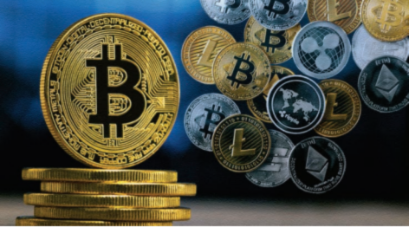
Difference between Digital, Virtual, and Crypto Currencies digital currencies can be considered a superset of virtual currencies and cryptocurrencies.

If issued by a central bank of a country in a regulated form, it is called the “Central Bank Digital Currency (CBDC).” While the CBDC only exists in conceptual form, England, Sweden, and Uruguay are a few of the nations that have considered plans to launch a digital version of their native fiat currencies.

Along with the regulated CBDC, a digital currency can also exist in an unregulated form. In the latter case, it qualifies for being called a virtual currency and may be under the control of the currency developer(s), the founding organization, or the defined network protocol, instead of being controlled by a centralized regulator. Examples of such virtual currencies include crypto currencies, and coupon- or rewards-linked monetary systems.

A crypto currency is another form of digital currency which uses cryptography to secure and verify trans

for some falsified reason. Businesses often look at this as a cost of doing business.

actions and to manage and control the creation of new currency units. Bitcoin and Ethereum are the most popular crypto currencies.

Essentially, both virtual currencies and crypto currencies are considered forms of digital currencies.

Seven benefits of using digital currencies

Unless you’ve been living under a rock, you’ve probably seen the news none. about the strong market performance of bitcoin and other digital currencies.

Bitcoin was valued at less than $1,000 on December 31, 2016 and has crossed more than $2,700 as of this writing. Other digital currencies, called alt coins, have also seen an increase in value, sometimes at a higher percentage than bitcoin.

Bitcoin is based on the block chain. Block chain is a distributed data base that supports bitcoin and other digital currencies. It allows for an immutable record of transactions that are pseudo-anonymous and decentralized through millions of computers around the world. Bitcoin and other digital currencies operate with block chain technology so trust is in mathematics rather than a third party.

Benefit # 1 Lower transaction fees

Credit card charges can be very steep, particularly with international use. They can range from 2 percent to 5 percent or more on transactions. I always feel the pain when I end up paying a few hundred dollars in transaction fees to accept payments from my clients who are in other countries. By using the block chain, bitcoin and other digital currencies, you pay a much lower fee, sometimes

Benefit # 2 No charge backs

By using bitcoin, you stop the fraud that comes from charge backs. Sometimes customers will purchase a product and use it, then ask for a full refund from the credit card company

By accepting payments in bitcoin, there are no charge backs. The sale is complete when you receive the transaction from your customer. Of course, as a good business, you can refund where you deem it to be a good business decision. It is nice to know that you’re not required to give a chargeback when you believe fraud is involved.

Benefit # 3 Faster receipt of funds than through legacy financial institutions

I mentioned earlier a problem with the fees associated with international transactions. That is bad enough, but the pain is exacerbated when it takes days or sometimes weeks to see the funds appear in my bank account.

The speed of processing transactions is usually completed within a few minutes, though lately, with the increased use of bitcoin, we have seen a slowdown. Nevertheless, it is still much faster than transaction times with legacy financial systems. Think of it like the speed of sending an email vs. sending a letter through snail mail.

Benefit # 4 No inflation

This is a big problem in many Third World countries, where central banks inflate their currency to try to keep their head above water. We also see it

If a thousand men were not to pay their tax-bills this year, that would not be a violent and bloody measure, as it would be to pay them, and enable the State to commit violence and shed innocent blood. This is, in fact, the definition of apeaceable revolution, if any such is possible.

(Henry David Thoreau)